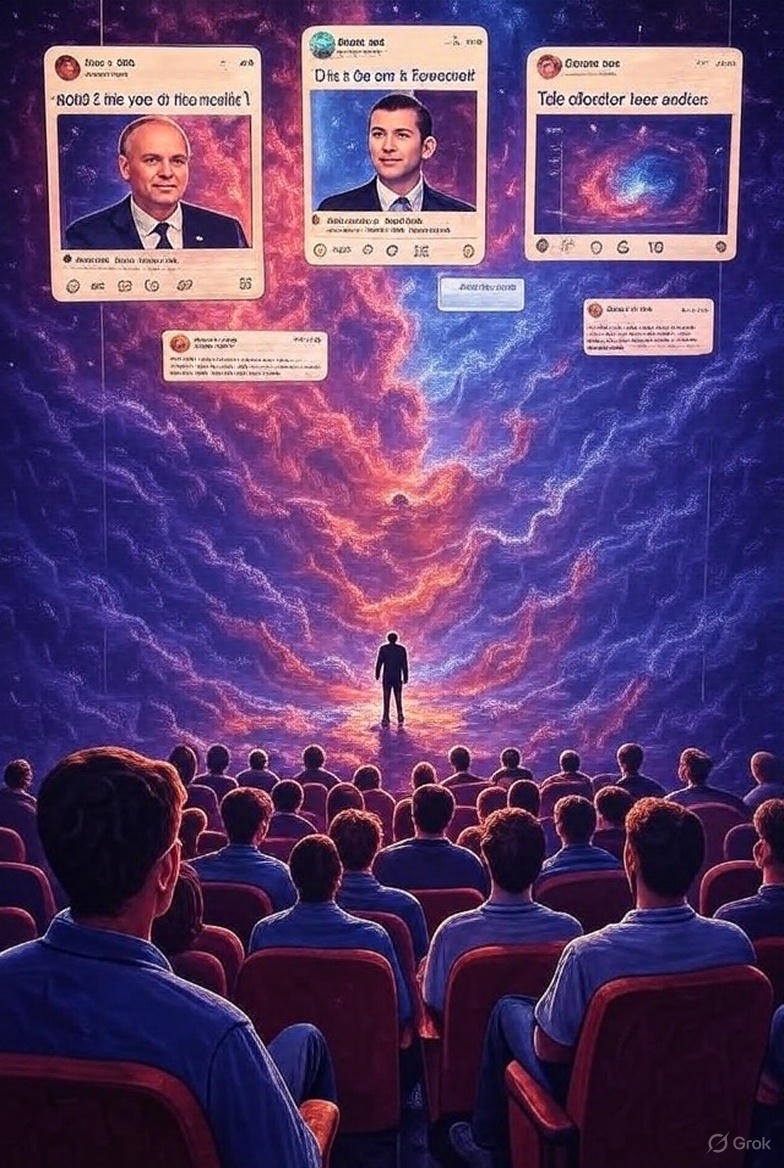
 Picture yourself in a dimly lit theater, watching a Twilight Zone episode that never ends. The world feels familiar, but the edges are warped…colors too vivid, voices too shrill. Reality, the shared understanding we once relied on to make sense of life, now feels like a scripted illusion, orchestrated with cutting-edge special effects aka CGI. One minute, you’re laughing at AI-generated puppy videos; the next, you’re drowning in a flood of outrage, conspiracy theories, and existential dread. Even those puppies seem suspiciously perfect, designed to keep you hooked.
This distortion isn’t random. Algorithms on platforms like X amplify divisive content…studies from 2024 showed they prioritize engagement, boosting polarizing posts to maximize clicks. Take the 2025 vaccine misinformation campaigns: false claims about side effects spread faster than truth, fracturing trust in health institutions. News headlines are crafted to provoke, not inform. A single tweet can spark a digital shouting match, drowning nuance in a sea of clickbait. It’s a relentless “now you see it, now you don’t” act, blurring truth and fiction until we’re too disoriented to find common ground.
Why does this happen? Our brains crave certainty, latching onto narratives that confirm our biases…a phenomenon psychologists call confirmation bias. Media outlets and influencers exploit this, crafting stories to keep us angry and engaged. Meanwhile, powerful institutions benefit from division, pushing narratives to maintain control. In 2025, a viral X post claiming election fraud ignited weeks of protests, despite lacking evidence. These cycles distract us from bigger issues, like economic inequality or climate challenges, hidden behind a smokescreen of misinformation.
This division is the real special effect. We’re so busy proving we’re right on politics, science, or even social media filters that we’ve forgotten how to listen. Echo chambers deepen, and shared humanity fades. We’re pitted against each other, distracted from the bigger picture, while algorithms hum in the background, shaping our perceptions.
But what if we hit pause? Imagine redirecting this energy to connect, not clash. Start by cross-referencing news with primary sources…check X for eyewitness accounts or official reports. Have one real-world conversation a week with someone who disagrees with you; ask questions, not to win, but to understand. Support independent journalism that prioritizes transparency over sensationalism, like outlets fact-checking viral claims. These steps aren’t easy, but they’re a start toward rebuilding trust.
We can’t rewind this Twilight Zone episode, but we can change the channel. Let’s write a new script one where empathy and truth take center stage. Imagine a world where we see each other as humans, not opponents, united by shared hopes and fears. If we don’t, the illusion may become permanent, and the credits will roll on our shared reality, leaving us trapped in a theater we can’t escape.

No comments:
Post a Comment