Saturday, January 31, 2026

​Moments in Black History – My Personal Commitment for February

Hello family, neighbors, friends and all those in between…

With these thoughts alone and out of the deepest respect and especially as 2026 marks the 100th anniversary of the first Negro History Week...I will be posting one minute reads that I've been writing called “Moments in Black History” every day for the 28 days of February.

I’m not a historian or a scholar… I’m just someone who believes that the stories of Black excellence, resilience, and brilliance deserve to be told, remembered, and celebrated. Too many names and contributions have been left out of the books we grew up reading. Too many quiet pioneers quietly changed the world while the spotlight passed them by.

So this February, I will be sharing one or more stories each day short, true, and full of heart because learning our full history isn’t just important… it’s freeing. I'll also be posting other moments in history… not just names and contributions. I hope these daily moments spark a little pride and wonder, and maybe even a conversation or two… because education is freedom of mind and never should be colorblind.

A huge thank you ahead of time to anyone who reads, reflects, or shares along the way...I'm looking forward to it because of you. 

- Oz Po

Friday, January 30, 2026

Two Plus Two Equals Five…Fight me…

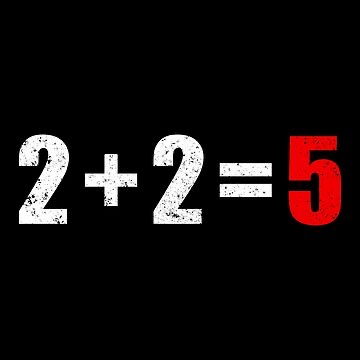
I’m currently reading George Orwell’s *1984* (written in 1949), and this one passage stopped me cold. The Party isn’t satisfied with making Winston obey they want him to hand over the last piece of himself he still trusts: his own eyes and mind. They hammer at him until he’s supposed to believe two plus two equals five.

For anyone who hasn’t read the book (and if you haven’t, grab a copy, download on Audible or see link believe for the free YouTube link…it’s worth experiencing firsthand without too many details spoiled), Winston Smith is one of the main characters: an everyday man in a tightly controlled society who starts quietly questioning the rules around him, holding onto basic truths that feel like his last bit of freedom.


Here’s the heart of that scene in simple terms (without spoiling how it all plays out): Picture a system so controlling it doesn’t just demand loyalty it insists you accept something you can clearly see is false. Winston can hold up his fingers two, then two more and count four. It’s straightforward, undeniable. But the regime pushes him relentlessly until he’s pressured to agree that 2 + 2 = 5. Not because reality shifted, but because refusing comes at an unbearable cost. The book shows, in chilling detail, just how far power will go to claim not just your actions, but your mind.


It’s never really about math. It’s about the terror when authority or even overwhelming social pressure…demands you deny what your own senses scream is true, just to get by. Once you surrender that small, rock-solid fact (“I see four, and four is what it is”), what else can’t they take?


As I keep reading, that idea lingers. I find myself pausing to look at my hands, counting quietly to myself. Still four. Still real. Still mine.


What about you? Have you ever felt pushed by a group, a boss, media, or just the crowd to accept something that clearly didn’t add up? Or seen others face that pressure? Share your thoughts in the comments below…I’d love to hear your thoughts. (Let’s discuss without giving away the full story for anyone interested in this book.)


https://www.youtube.com/watch?v=Oip9NVWU2wQ


Wednesday, January 28, 2026

Personal Thought

Sometimes, I feel misunderstood and invisible. I mean...I feel that I have a sense of purpose, but no one pays attention…unless a celebrity says it or something happens in real time before it's acknowledge out loud. However,  everything goes unnoticed and forgetful amongst the crowd. Maybe…one day it’ll all make sense when I'm buried beneath the ground.

Monday, January 26, 2026

​Even Legends Miss. This Is What Kobe Did Next…

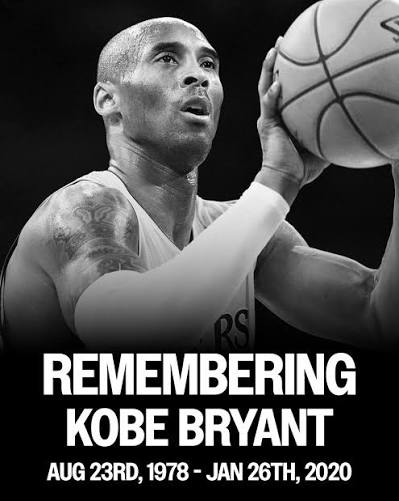
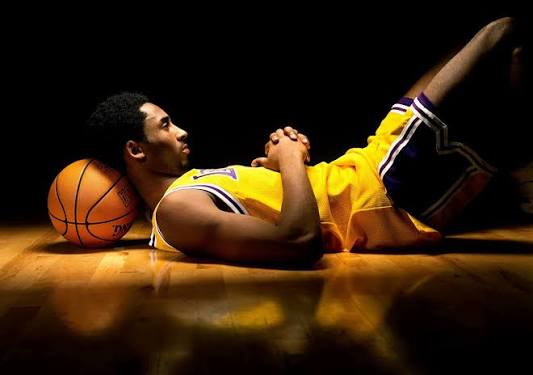
Today, we remember Kobe Bryant on the sixth anniversary of his passing. The moment I always come back to is 12 May 1997, when an eighteen-year-old kid stepped onto the floor in the middle of the NBA playoffs with a season hanging by a thread. It was Game 5 against the Utah Jazz, do-or-die for the Lakers, and when the moment got heavy, the ball kept finding Kobe…four shots in the final minutes of regulation and overtime.

Every one of them was an airball. Not a bounce. Not even a whisper of rim. The Lakers lost. Their season was over. And the headlines wrote themselves: rookie chokes on the biggest stage.

I didn’t feel bad for him back then. Truth is, I didn’t even like Kobe. I heckled him from wherever I was watching his games and rooted against him. I called him “the copycat.” My GOAT was Michael Jordan…Mr Untouchable, mythical, the first image of greatness I had ever seen. Funny thing is, just the day before Kobe passed, I was talking after a pickup game about how Jordan was the standard. Kobe felt like the stepdad trying to step into a role that was already filled. I wasn’t ready to accept anyone else as the standard, so I rooted against the kid in purple and gold.

Most players would have disappeared after a moment like that. Public failure has a way of shrinking people, convincing them to play it safe, to stop reaching. But Kobe didn’t run from it. He didn’t blame the moment, didn’t blame the lights, didn’t blame anyone else.

He watched the tape. Noticed his legs shaking. Recognized what a full rookie season had taken out of his body. The shots felt right leaving his hands…they just didn’t have enough to get there. So that night, instead of hiding, he went back to the gym. Shot after shot. Miss after miss. Lesson after lesson.

And then he changed everything. He rebuilt his body through weight training, conditioning, endurance, the kind of work most players avoided because it was lonely and thankless. That one painful, public failure didn’t break him. It sharpened him. It became the edge he carried for the rest of his life.

Five championships followed. Countless clutch shots. A career defined not by perfection, but by response.

I understand it now…he wasn’t trying to replace Jordan. He was carving his own path, just as real and just as earned. Like any kid, he studied his role model, learned from him, and then flourished on his own.

It wasn’t until his very last game, 13 April 2016, that the full weight of his journey hit me. Thirty-seven years old, worn down, running on fumes, and he willed sixty points into existence anyway. Fadeaway after fadeaway, clutch shot after clutch shot…pure refusal. Watching it, I finally saw what he had been building all those years: the fire, the discipline, the refusal to quit, the ability to turn every doubt, every miss, every hater into fuel—against the very same team he’d played one of the most painful games of his career years earlier…the Utah Jazz.

He didn’t stop there. Every missed shot, every loss, every doubt became fuel. He went back to the gym when most would have gone home. Shot after shot, rep after rep. He built his body. He built his mind. He built a work ethic that didn’t quit, that refused to settle, and that sharpened him into the player and the man we remember today.

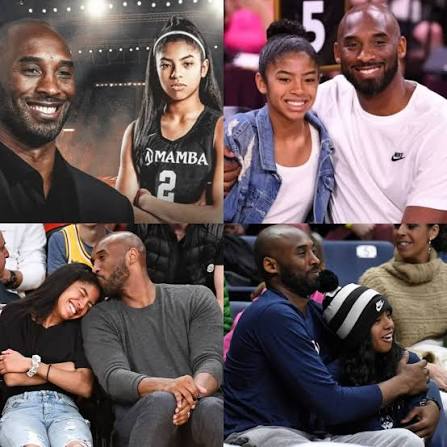
And it wasn’t just about basketball. Off the court, he carried that same intensity into life. He was the girl dad, showing Gigi the game he loved, breaking down footwork, spacing, angles. Not pushing a legacy on her…sharing a love. He respected women’s sports. He studied them. He advocated for them. And you could see it in his smile: this wasn’t about trophies anymore. It was about joy. Growth. Passing something forward.

We all have airball moments…the pitches that flop, the promises we break, the dreams that slip by. And yes, the sting is real. But what separates those who fade away from those who become unstoppable is simple: what you do after the miss.

You study it. You fix what’s weak. You get back up. Hungrier. Smarter. Stronger.

Kobe’s airballs didn’t define him. They sharpened him. And every time life leaves you short, remember this: the next shot is still yours. Keep shooting.

Rest in power, Kobe. Your life lessons still live with us. And our thoughts and prayers are with the other victims of the crash and the families who carry that loss every day.

Friday, January 23, 2026

​Restoring Truth or Rewriting History?

I woke up this morning scrolling through the news, and there it was: another story about how we’re supposedly “restoring truth and sanity” to our nation’s past by yanking out pieces of it that make us uncomfortable. The latest? Slavery exhibits pulled from a historic site in Philadelphia, right in the heart of where our country was born. It’s got me fired up, because if this is what truth looks like, then we’re in deeper trouble than I thought.

Let’s back up a bit. This all stems from an executive order aimed at scrubbing “corrosive ideology” from federal sites like national parks and museums. The idea, as pitched, is to focus on the “greatness” of America, highlighting progress and unity instead of dwelling on the dark spots. Sounds noble on paper, right? Who doesn’t want to celebrate the wins? But here’s the rub: when you start removing exhibits about slavery from the very house where our first president lived…and yes, where he held enslaved people…you’re not restoring sanity; you’re sanitizing history.

Think about this...the President’s House site in Independence National Historical Park. It’s not some obscure footnote; it’s a place that tells the story of George Washington and the nine enslaved individuals who lived there under his roof. Plaques and panels laid out their lives…the daily grind, the “dirty business” of it all, as one exhibit put it. These weren’t inflammatory rants; they were facts, backed by records, meant to give a fuller picture of what early America really looked like. Slavery wasn’t a sidebar; it was woven into the fabric of our founding. Ignoring that doesn’t make us greater; it makes us ignorant.

And now, those exhibits are gone. Dismantled in a hurry by park service workers, following orders from above. The city of Philadelphia is suing to get them back, arguing it’s a sneaky way to alter history without a whisper of public input. Local leaders are calling it whitewashing, and honestly, that’s spot on. We’ve seen this pattern before reviews and removals at other sites, all under the same banner of “truth.” But whose truth? The one that glosses over the fact that our heroes were human, flawed, and part of a system that treated people as property?

I get the impulse. History can be brutal. It forces us to reckon with contradictions: a nation built on liberty that denied it to millions. Enslaved people built the White House, picked the cotton that fueled the economy, and yet their stories get sidelined when we talk about American exceptionalism. Removing these exhibits doesn’t erase the pain; it just pretends it never happened. That’s not sanity…it’s selective amnesia. And in a country still grappling with inequality, that kind of denial only deepens the divides.

Think about the kids visiting these sites. What do they learn if we only show the shiny parts? That America sprang fully formed as a beacon of freedom? No, the real lesson is in the struggle…the abolitionists who fought back, the enslaved who resisted, the long road to civil rights. That’s the progress we should celebrate: not by hiding the starting point, but by owning it. Here's my two cents, spend it how you'd like...the truth isn’t always pretty, but facing it is what makes us strong as a nation. My own reflections on this come from seeing how history's full picture...struggles included has shaped who we are today.

Critics of these removals aren’t out to “disparage” anyone; they’re insisting on completeness. The executive order claims to protect against ideology, but isn’t cherry-picking facts its own form of bias? We’ve got lawsuits brewing, governors speaking out, advocates rallying…because this matters. History isn’t a feel-good story; it’s a mirror. If we’re afraid to look, how do we grow?

In the end, this push for “sanity” feels like anything but. It’s a reminder that history is contested ground, and right now, some are trying to redraw the lines. But the truth has a way of bubbling up. Those exhibits might be gone for now, but the stories they told? They’re etched in our collective memory, waiting to be retold. Let’s hope the courts step in and put them back where they belong…FRONT & CENTER, in the light of day. Because real sanity comes from understanding the whole truth, warts and all. Anything less is just a fairy tale.


Saturday, January 17, 2026

Two Ears, One Mouth: Why Listening to Receive Could Change The World We Live In

In a world that moves fast and talks louder, we've forgotten one of the simplest paths to real understanding: truly listening.

We have two ears and one mouth for a reason. That old line often linked to the Stoic philosopher Epictetus…has stuck around because it's painfully true. We listen to respond, to win an argument, to prove a point, or to fill silence with our own story. But real connection happens when we listen to receive: to take in someone's words, feelings, and world without rushing to fix, judge, or counter. We’re all guilty of it... so let's be mindful of our own imperfections.
Think about the last time someone asked you a question and actually waited for your full answer. No interrupting, no steering the conversation back to themselves. It felt rare, right? Almost disarming. That's because genuine curiosity is scarce. We skim surfaces, asking questions like....where are you from? What do you do? Then move on. But those questions, when asked with patience, can open doors.
Start small: "I'm really curious because..." or "I'd love to hear your perspective on..." These aren't magic words; they're signals that you're present, not performing. Follow with something open-ended: Tell me more about yourself. What's one thing you wish more people understood about your culture or experiences? Why are certain holidays important to you? These aren't checklists to "get" someone's background; they're invitations to share what matters to them.
When you ask like that, you're not ticking boxes about culture or race. You're showing interest in the person standing in front of you. Most folks can sense the difference between polite probing and sincere care. And when they feel seen, walls come down. A simple conversation becomes the starting point for awareness: of their joys, struggles, values, and the quiet ways life has shaped them.
This matters now more than ever. We judge quickly from our upbringing, our feeds, our echo chambers. We hear fragments and fill in the rest with assumptions. But bridging divides, whether across cultures, races, politics, religion, or just daily misunderstandings, begins with pausing the reflex to reply and choosing to absorb instead.
It's not about agreeing with everything someone says. It's about honoring their right to be heard fully before you shape your response. In that space, empathy grows. Trust builds. And suddenly, the "other" isn't so other anymore.
Here’s my two cents, spend it how you’d like. Next time you're talking to someone whose life looks different from yours, try it. Resist the urge to jump in. Let their words land. Ask one more gentle follow-up. Listen twice as much as you speak.
You might be surprised how much closer two people can feel after just one real conversation. In a noisy world, that quiet act of receiving is revolutionary.

Tuesday, January 13, 2026

​Why Does It Feel Like We're Living in Different Realities?

Ever have a conversation that leaves you feeling dizzy and disoriented, as if you’re arguing with someone from an alternate dimension? You lay out the facts as you see them and they are clear, solid, and undeniable…only to be met with a version of "truth" or “alternative facts” so fundamentally different it feels like it was beamed from another planet. 

Trust me, you're not going crazy. That feeling is real, and it’s one of the defining struggles of our time. 

The simple explanation is that none of us sees the world with perfectly clear vision. We each view it through a lens ground and polished by our unique life story. Your upbringing, your financial struggles or comforts, the community you call home, your personal triumphs and your deepest traumas…all of it creates the invisible architecture of your belief system. What feels like fundamental, unshakable common sense to you is a direct product of the path you've walked.

That’s why two people can look at the exact same event and see entirely different things. One sees a cry for justice, the other a threat to order. One sees a necessary safeguard, the other an unforgivable overreach. It’s rarely because one person is good and the other is evil. It’s because their life experiences have taught them to prioritize different values…like liberty over safety, community over the individual, and vice versa. Their moral bedrock is simply built on different ground.

For generations, this was manageable. But something has clearly changed…and the ground beneath us has fractured.

We are no longer just having different opinions; we are being actively sorted into different realities. The digital world, which promised to connect us, has instead perfected the art of isolation. We live inside algorithmically-tuned echo chambers, meticulously designed to feed us a constant diet of what we already believe...and, more insidiously, what we should be outraged by. Our own views are reflected back at us, magnified and validated, until they feel like the only sane perspective in a world gone mad.

This isn’t an accident. It's a business model. An entire industry thrives on our division, profiting from every click, every share, every angry emoji. It’s a digital coliseum where nuance goes to die, and the loudest, most extreme voices are rewarded with attention. We're being trained to see the other side not as people with different life stories, but as comic strips…enemies to be defeated, not neighbors to be understood.

And the cost of this is devastatingly real. This isn't a game of online debate. It’s the reason families are torn apart at the dinner table. It’s why communities are paralyzed, unable to solve the real crises at their door. It’s the cold, silent chasm that grows between old friends who can no longer find the words to speak to one another.

So, what can we possibly do? Shouting our facts louder won't work. We've all tried that. It's like turning up the volume on a radio playing a song no one else wants to hear.

The first step is perhaps the most difficult one we can take: to turn the spotlight on ourselves. To have the humility to ask, "What is my lens made of? What is my echo chamber feeding me?" To acknowledge that our own sense of certainty might be, in part, a product of the same machine we resent.

The second step is an act of quiet rebellion. It’s the choice to deliberately step out of the digital coliseum, leaving behind the deafening roar of a million voices babbling like ancient Babylon, where everyone is talking and no one is heard.

Instead of launching another pre-packaged argument into that chaos, you walk toward the person on the other side. You refuse to add to the noise. You choose to speak a different language entirely…one of simple, quiet understanding. It’s a language that begins with the most disarming and powerful question there is: "Help me understand. How did you come to see it that way?"

This isn't surrender. It’s a strategy. It's a refusal to play the game. It is a radical act of curiosity in a world that demands certainty.

The goal is not to win the argument. The goal is to reclaim the person on the other side of it. We don't have to agree on everything to share the same reality. We just have to believe that finding our way back to the same planet is a journey worth taking.

Friday, January 9, 2026

The Devil's Greatest Trick

There’s a strange feeling in the air, a sense that the ground beneath our feet is constantly shifting. We’re living in a world of "now you see me, now you don't," a place where the solid truths of yesterday can vanish in the blink of an eye. It’s as if an MIB Agent has used a neuralyzer on all of us, erasing what we know we saw and handing us the official record to spin...a new reality for the crowd to consume.

Think about the world we see online, a landscape fueled by negativity from social media posts, memes, videos, and GIFs. It feels like people are desperate for their turn at the DJ booth, ready to spin any record, no matter how distorted, as long as it plays a tune their tribe wants to hear. We scroll through these highlight reels and outrage feeds, and a little voice in our head starts to whisper, "Is my life this good? Am I angry enough?" We know these images and hot takes are just a fraction of the story, yet the feeling of inadequacy or agitation is hard to shake. It's a subtle twist of reality that leaves us questioning our own lives.

But this distortion runs deeper. It feels like we're surrounded by people with “D” batteries in their backs, mindlessly marching to a beat banged out by someone else's drum. These self-proclaimed intellectuals serve up misinformation and false narratives to anyone willing to take a bite, twisting reality until we can no longer see things for what they are. They create a sense of "us versus them," a tribal mentality that thrives on emotion and rejects objective facts. It's a constant battle for our attention and our allegiance, and in this battle, the truth often becomes a casualty.


The result is a gnawing unease, a feeling that we're living in a "post-truth" world where facts are secondary to feelings and personal beliefs. We're left to navigate a landscape of conflicting information, where it's increasingly difficult to know who or what to trust. This isn't just about individual confusion; it's a phenomenon that erodes the very foundations of our society. When we can't agree on a shared reality, how can we possibly come together to solve the problems we face?


It's a disorienting and often frightening new world we find ourselves in. We are constantly being pulled in different directions, our perceptions shaped by forces we may not even be aware of. It's a world of smoke and mirrors, a grand illusion that leaves us feeling lost and powerless. And perhaps, in the end, that is the point: a confused and divided populace is a controllable one.


"The greatest trick that the devil ever pulled was to convince the world that he didn't exist."- Roger Verbal Kint, The Usual Suspects (1995)